
Step by step how to factory reset macbook pro without password
There is nothing quite as heart-stopping as staring at a login screen and realizing your mind has gone completely blank, effectively locking you out of your digital life.
Whether you inherited an old machine or simply forgot your credentials, knowing how to factory reset MacBook Pro without password is the ultimate key to regaining control. It is a terrifying moment, but rest assured, this is a problem with a definitive solution.
The truth is, Apple has built-in failsafes designed exactly for this situation, and utilizing them doesn’t require a degree in computer science. You simply need to follow the correct sequence of events to wipe the slate clean.
So, take a deep breath, push aside the anxiety, and prepare to give your MacBook Pro a fresh start today.
In this guide, we are going to walk through the specific, fail-proof steps to erase your hard drive and reinstall the operating system from scratch. Let’s get your machine back up and running.
When you might need to reset without a password
We often think of a factory reset as a last resort, but there are several common scenarios where this becomes the only logical path forward for a healthy machine. Perhaps you have purchased a second-hand MacBook Pro online, and the previous owner neglected to wipe their data, leaving you stuck at their login prompt.
Or, maybe you are the one preparing to sell or trade in your device, and you want to ensure absolutely none of your personal data remains, but a forgotten admin password is blocking the standard reset menu.
Furthermore, severe malware infections or a corrupted operating system update can sometimes render the standard login process impossible. In these cases, the “nuclear option” of a factory reset is actually a blessing in disguise.
It clears out the system rot, removes the forgotten credential barriers, and gives you a “box-fresh” experience, ensuring the computer runs as fast and smoothly as the day it was manufactured.
Important considerations before restarting
Before we rush into the technical steps, we need to address the elephant in the room: data loss is permanent, and you need to be psychologically and technically prepared for it. A factory reset is destructive by nature; it does not just remove the password, it obliterates every photo, document, and application on the hard drive.
If you do not have a Time Machine backup or a cloud backup currently in place, proceed with the understanding that the data currently on the drive will be gone forever once we begin the erasure process.
Additionally, you must consider the “Activation Lock” feature associated with Apple’s T2 security chips and Apple Silicon (M1/M2/M3) chips. Even if you wipe the drive, the computer may ask for the Apple ID and password originally associated with the device to reactivate it.
Ensure you know the Apple ID credentials or have proof of purchase to present to Apple Support if you get stuck. Finally, plug your MacBook Pro into a power source; losing battery power in the middle of a macOS reinstallation can corrupt the firmware.
How to restore factory settings on a MacBook Pro without a password using recovery mode
The magic bullet for this process is macOS Recovery, a special mode that loads before the main operating system to allow for diagnostics and repairs. This is the environment where you will perform the wipe, bypassing the need for the administrator password that usually guards the “Erase All Content and Settings” feature inside the main OS.
The method to enter this mode differs depending on whether you have an Intel-based Mac or one with Apple Silicon.
- For Intel Macs: You will rely on keyboard combinations immediately after pressing the power button.
- For Apple Silicon (M1, M2, M3): The process involves holding the power button to access startup options.
Regardless of your model, once you are in this mode, you have deeper access to the machine’s drive than a standard user, allowing you to reformat the drive completely.
Step 1: Shut down and boot into recovery mode.
The first step requires precision, as timing is everything when tricking the computer into bypassing its standard boot sequence to enter the recovery partition.
Instructions:
- Completely shut down your MacBook Pro. If it is frozen at the login screen, hold the power button down for 10 seconds until the screen goes black.
- For Intel Macs: Press the Power button, then immediately press and hold Command (⌘) + R. Keep holding these keys until you see the Apple logo or a spinning globe.
- For Apple Silicon: Press and hold the Power button. Continue holding it even after the Apple logo appears. You will eventually see “Loading startup options.” Select “Options” and click “Continue.”
- If asked to select a user you know the password for, you can try to skip this, but if you are truly stuck, you will proceed to the “Recovery Assistant” and look for the option to “Erase Mac” in the menu bar, or proceed to Disk Utility.
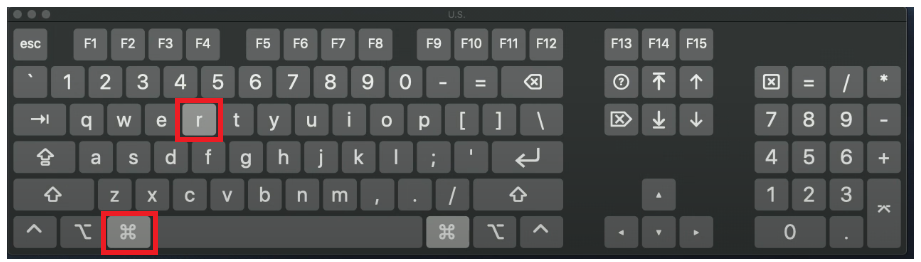
Step 2: Access Disk Utility to erase the drive.
This is the point of no return—the moment we scrub the hard drive clean to remove the password restriction along with the old data.
Instructions:
- From the macOS Utilities window, select Disk Utility and click “Continue.”
- In the sidebar, look for your startup disk, usually named “Macintosh HD.” If you see “Macintosh HD – Data,” you will need to delete that volume specifically or erase the whole volume group.
- Select “Macintosh HD” and click the Erase button in the toolbar at the top of the window.
- A dialog box will appear. Name the drive (usually “Macintosh HD”) and choose the format. For most modern Macs running macOS 10.13 or later, choose APFS. If you are on a very old Mac, choose Mac OS Extended (Journaled).
- Click Erase Volume Group (or just Erase). Wait for the process to complete, then close Disk Utility.
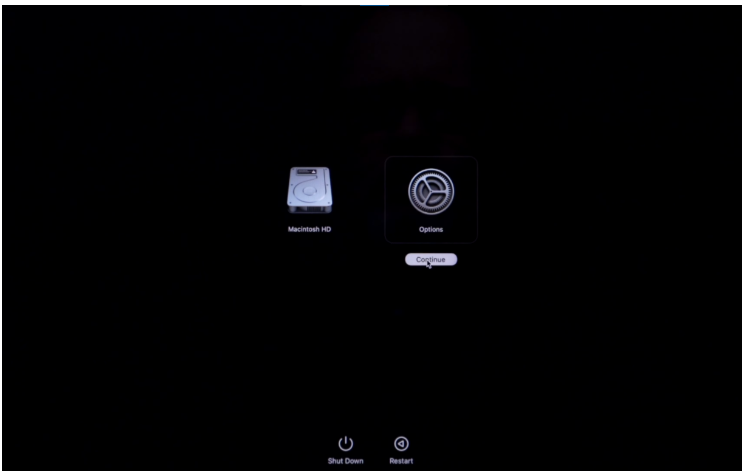
In the Disk Utility window, in the sidebar, select the startup disk (usually called “Macintosh HD”).
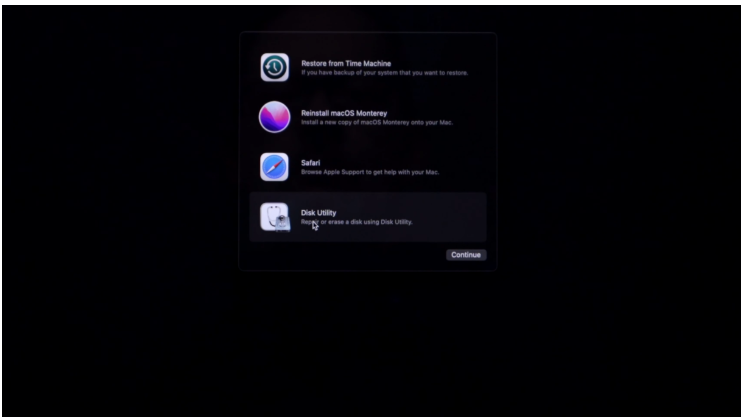
At the top of the window, locate and press the Delete button.
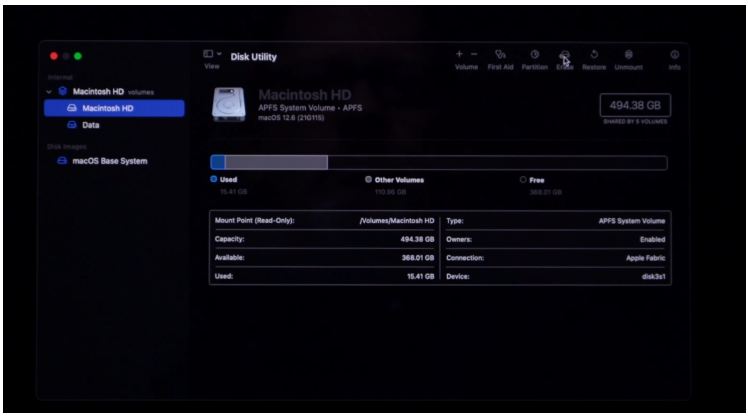
Choose the format: APFS (for the latest Mac with SSD, not HDD) or Mac OS Extended (Journaled) (for external Macs with HDD) and click Erase to erase the disk.
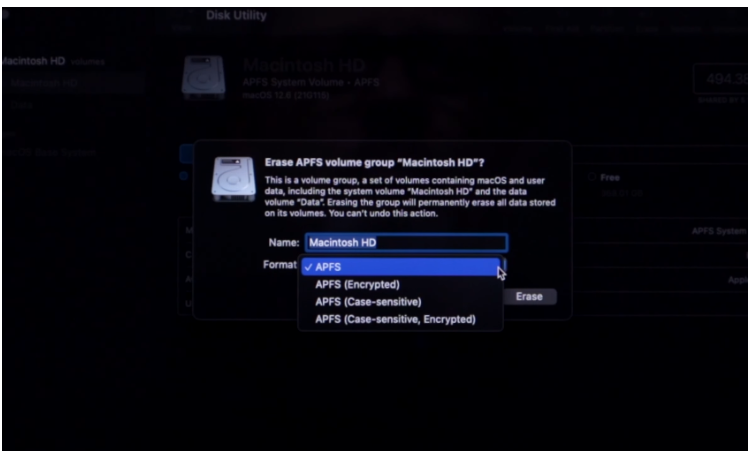
Next, click Erase Mac and Restart.
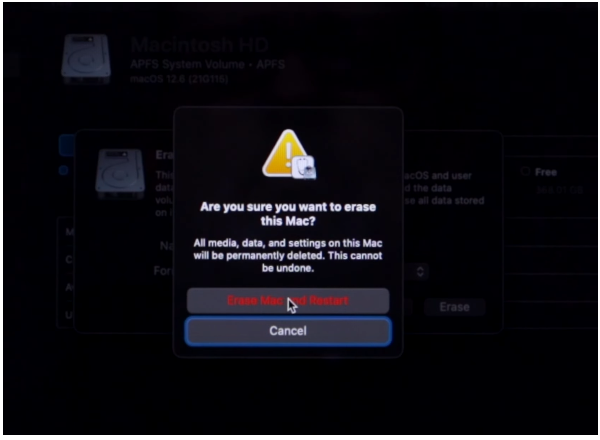
Step 3: Reinstall macOS
Now that the drive is empty, your MacBook Pro is essentially a blank slate; it has no operating system to run, so we must install a fresh copy of macOS.
Instructions:
- After closing Disk Utility, you will be returned to the main Utilities window.
- Select Reinstall macOS (the specific version name, like Sonoma or Ventura, will likely appear).
- Click “Continue” and agree to the software license terms.
- Select the disk you just erased (Macintosh HD) as the destination for the installation.
- Click “Install.” Your Mac may restart several times and show a progress bar. Do not close the lid or disconnect the power during this time. This process can take anywhere from 30 minutes to over an hour depending on your internet speed.
How to bypass activation lock — what you need to know
We touched on this earlier, but it is the number one hurdle users face after learning how to factory reset MacBook Pro without password successfully.
If the Mac had “Find My” enabled, the activation lock is active. After the reinstall, the setup assistant will say “Mac Locked to Owner.” There is no software hack to bypass this on modern Macs; it is a server-side lock at Apple.
Instructions:
- Enter the Apple ID and password previously used on the device.
- If you don’t know it, you can reset the Apple ID password via a different device (like an iPhone).
- If you bought the device used, you must contact the seller to remove the device from their iCloud account remotely (they can do this at iCloud.com/find).
- If all else fails, you must take the device and your original proof of purchase to an Apple Store to request they remove the lock.
Proceeding safely and responsibly
As a veteran in the tech blogosphere, I have a responsibility to remind you that these tools are powerful and must be used ethically.
Knowing how to wipe a computer is a standard IT skill, but it should never be used on stolen property. Modern Apple security features make stolen MacBooks virtually useless due to the Activation Lock mentioned above.
Furthermore, regular factory resets can be good for your computer’s health if you notice sluggish performance over the years. Treat this process as a maintenance tool or a recovery method, ensuring you always keep backups of your data. Responsible tech ownership means knowing how to fix your device, but also knowing how to protect the data that lives on it.
Conclusion
Regaining access to a locked computer feels like pulling off a magic trick, but as we have seen, it is simply a matter of following the right protocol. You have successfully navigated the panic of a lost password, moved through the technical nuances of Recovery Mode, and emerged on the other side with a machine that is fresh, clean, and ready for action.
Don’t let the fear of technology paralyze you. Whether you are reviving an old workhorse or fixing a mistake, you now possess the knowledge to handle one of the most common Mac disasters. Enjoy that “new computer” feeling—you’ve earned it!
READ ALSO: how do you unfreeze a macbook
Frequently Asked Questions
Q1: How do I reset my MacBook Pro to factory settings without password?
A: To reset without a password, you must enter Recovery Mode. Restart your Mac and immediately hold Command + R (Intel Macs) or press and hold the Power Button (Apple Silicon M1/M2) until startup options appear. From there, select Disk Utility, erase your hard drive (usually named “Macintosh HD”), and then select Reinstall macOS.
Q2: Can you do a factory reset on a locked MacBook Pro?
A: Yes. If you are locked out of the user account because you forgot the login password, you can still factory reset the machine using Recovery Mode. However, if the Mac has a Firmware Password or Activation Lock enabled, you will need the Apple ID credentials or the firmware code to proceed.
Q3: What keys do I press to factory reset my Mac?
A: It depends on your processor:
- Intel-based Macs: Restart and hold Command + R.
- Apple Silicon (M1/M2/M3): Shut down, then press and hold the Power Button until “Loading startup options” appears.
Q4: How to factory reset laptop without password?
A: For a MacBook, shut it down completely. Boot into Recovery Mode (Command + R or Power Button). Open Disk Utility, select your main drive, click Erase, and choose the format (APFS or Mac OS Extended). Once erased, choose Reinstall macOS from the main menu.
Q5: How do I force my Mac to erase?
A: You cannot force an erase from the desktop if you don’t have the admin password. You must boot into Recovery Mode. Once in Disk Utility, selecting the main drive and clicking Erase effectively “forces” the deletion of all data and partitions.
Q6: How to remove previous owner Apple ID without password on Mac?
A: If the Mac is Activation Locked (linked to the previous owner’s Apple ID), you cannot bypass this simply by resetting the machine. You must ask the previous owner to remove the device from their iCloud account remotely. Without their credentials or original proof of purchase presented to Apple Support, the device cannot be unlocked.
Q7: How do I wipe and factory reset my Mac?
A: The process is two-fold:
- Wipe: Use Disk Utility in Recovery Mode to “Erase” the Macintosh HD volume group.
- Reset: After erasing, return to the Utilities menu and select “Reinstall macOS” to download a fresh copy of the operating system.
Q8: What is the F12 key on a Mac?
A: On a Mac, the F12 key is typically used to increase volume (or open the Dashboard on older OS versions). Unlike Windows PCs, F12 is not used to enter BIOS or factory reset menus. You must use Command + R or the Power button for Mac recovery options.
Q9: How to do a hard reset in Apple?
A: A “hard reset” usually refers to a factory reset. Follow the Recovery Mode steps (Command + R). If you are referring to a “Force Restart” because the screen is frozen, hold specifically the Control + Command + Power Button (or just the Power button alone for 10 seconds).
Q10: Can a stolen MacBook be wiped?
A: A thief can wipe the data off the drive using Recovery Mode, but they likely cannot use the laptop afterwards. If Find My Mac was enabled, Activation Lock will prevent the Mac from being set up or used again without the original owner’s Apple ID and password.
Q11: Can I reset a MacBook password without Apple ID?
A: Yes, usually. Boot into Recovery Mode and open Terminal from the Utilities menu. Type resetpassword and press Enter. A wizard will launch allowing you to reset the password or erase the Mac. Note: If FileVault is on, you may still need the Recovery Key.
Q12: How to factory reset Apple without passcode?
A: Since you cannot access the “Erase All Content and Settings” menu inside the OS without a passcode, you must rely on the Recovery Mode method (Command + R on boot) to erase the disk externally.
Q13: How to delete everything on a MacBook without a password?
A: Use Disk Utility within Recovery Mode. Select the top-level drive (often labeled “Apple SSD” or “Macintosh HD”), click Erase, and confirm. This permanently deletes all files, apps, and user accounts without requiring the user login password.
Q14: Why won’t my MacBook let me erase everything?
A: This usually happens if:
- You are trying to erase the drive while logged into it (you must be in Recovery Mode).
- The drive is encrypted with FileVault and requires a mount password.
- You do not have administrative permissions.
Ensure you are booted into Recovery Mode to bypass these restrictions.
Q15: How to force delete on MacBook Pro?
A: If you are trying to delete a specific stubborn file, you can use the shortcut Option + Command + Delete. If you are trying to “force delete” the entire system, follow the instructions for wiping the drive via Disk Utility in Recovery Mode.

Sou Marisa Silva — Ao longo dos anos, desenvolvi um profundo interesse por temas que ajudam as pessoas a entender melhor a si mesmas e o mundo ao redor. O blog, que começou focado em interpretações de sonhos, hoje evoluiu para explorar uma variedade de assuntos — desde bem-estar, comportamento e desenvolvimento pessoal até temas do cotidiano que despertam dúvidas e interesse.